


Table of Contents
- Why CRM Retention Matters More Than Ever
- The Shift from Acquisition to Retention-Focused Growth
- Understanding the Role of CRM in Retention
- Smart CRM Retention Tactics That Drive B2B Growth
- 1. Automate Customer Health Monitoring
- 2. Segment Clients for Tailored Engagement
- 3. Strengthen Onboarding with Automation
- 4. Use Predictive Analytics for Renewal Management
- 5. Personalize Support and Communication
- 6. Empower Sales and Support Collaboration
- 7. Incentivize Customer Advocacy Through CRM
- 8. Analyze Feedback and Close the Loop
- 9. Reward Loyalty with Tiered Value Programs
- 10. Combine CRM Data with Predictive Revenue Insights
- Leveraging AI to Enhance CRM Retention
- Measuring Retention Success: Key CRM Metrics
- Building a Culture of Retention
- The Future of CRM Retention: Predictive, Adaptive, and Human
- Final Thoughts
In today’s hyper-competitive B2B market, growth no longer depends solely on acquiring new customers. Sustainable success hinges on retaining and nurturing existing clients, turning one-time buyers into long-term partners. Yet many B2B brands still invest the majority of their resources in lead generation while neglecting the goldmine of opportunities within their customer base.
This is where Smart CRM Retention Tactics come into play. With the right B2B CRM strategies, companies can identify at-risk accounts, personalize engagement, and foster loyalty that translates into measurable revenue.
In this guide, we’ll explore how intelligent CRM systems empower businesses to strengthen relationships, reduce churn, and unlock consistent B2B growth.
Why CRM Retention Matters More Than Ever
The B2B environment has evolved dramatically in recent years. Decision cycles are longer, buyer groups are larger, and expectations are higher. Amid this complexity, retaining customers is far more cost-effective than constantly chasing new ones.
Consider this: research shows that increasing customer retention by just 5% can boost profits by 25% to 95%. Loyal customers are also five times more likely to repurchase and refer others.
Despite this, many organizations treat CRM as a database rather than a growth engine. They use it for contact management, not for strategic retention. In 2025, that’s a costly mistake.
A Smart CRM — when used effectively — becomes the foundation of a retention-driven business model.
The Shift from Acquisition to Retention-Focused Growth
For years, B2B marketing success was measured in lead volume and acquisition metrics. But as markets mature and competition intensifies, acquisition costs have soared.
Retention, on the other hand, offers predictable revenue and long-term stability. This shift has given rise to Customer Lifecycle Marketing, where CRM tools play a central role in mapping, measuring, and optimizing every stage of the relationship.
Instead of viewing the customer journey as ending with the sale, smart companies now extend it into onboarding, support, expansion, and advocacy.
Here’s the key takeaway: growth doesn’t stop at conversion — it accelerates after it.
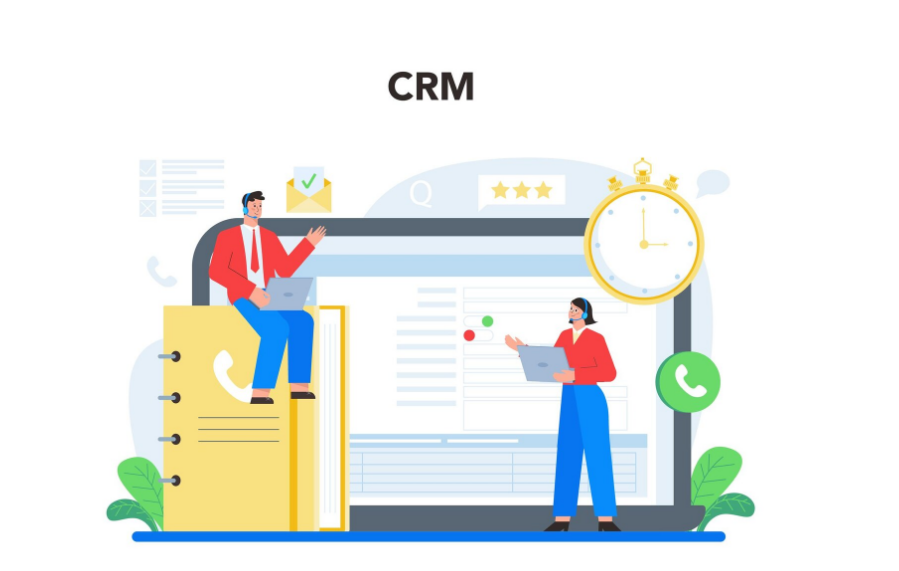
Understanding the Role of CRM in Retention
A Customer Relationship Management (CRM) system is far more than a database. At its best, it serves as an intelligent hub for all customer interactions, insights, and engagement patterns.
Modern CRM platforms like HubSpot, Salesforce, Zoho, and Microsoft Dynamics integrate AI analytics, automation, and predictive modeling — giving businesses a 360° view of every client.
Here’s how CRMs drive retention:
1. Centralized Customer Intelligence
A smart CRM consolidates communication history, preferences, purchase behavior, and support data. This unified profile helps sales and success teams anticipate client needs and provide proactive service.
2. Predictive Churn Analysis
AI-powered CRMs can identify early warning signs of disengagement — such as declining usage, reduced communication, or delayed payments — enabling teams to intervene before it’s too late.
3. Personalized Client Engagement
Automation tools personalize outreach based on account activity, renewal dates, or satisfaction scores. This level of relevance fosters trust and strengthens loyalty.
4. Data-Driven Decision-Making
CRM analytics reveal which accounts generate the most value, which are at risk, and where cross-sell or upsell opportunities exist — allowing marketers to act strategically, not reactively.
Smart CRM Retention Tactics That Drive B2B Growth
Now that we understand the why, let’s explore the how. The following CRM-driven retention strategies are reshaping B2B client relationships in 2025.
1. Automate Customer Health Monitoring
Smart CRMs leverage AI and machine learning to calculate Customer Health Scores — metrics that combine usage patterns, engagement levels, and satisfaction data.
These scores highlight which accounts are thriving and which need attention. For example:
- A sudden drop in platform logins might indicate dissatisfaction.
- Lack of response to renewal reminders could signal churn risk.
Automated alerts help your team act immediately, sending follow-ups or scheduling check-ins to resolve potential issues before they escalate.
2. Segment Clients for Tailored Engagement
Segmentation is a core CRM capability that enhances retention efforts. By grouping customers by size, industry, lifecycle stage, or value tier, you can deliver highly targeted communication.
For example:
- Enterprise clients may receive quarterly strategy reviews.
- SMBs might get educational content or automation tips.
- New clients could be guided through personalized onboarding workflows.
This data-driven segmentation ensures that every interaction feels relevant and purposeful — a crucial factor in retention.
3. Strengthen Onboarding with Automation
The first 90 days post-sale determine whether a customer becomes loyal or disengaged. Smart CRM systems automate onboarding sequences with checklists, educational emails, and milestone tracking.
Automation ensures no client is left behind, while CRM dashboards help customer success teams monitor each account’s progress. A seamless onboarding experience sets the tone for long-term satisfaction.
4. Use Predictive Analytics for Renewal Management
CRM-integrated predictive analytics tools can forecast renewal likelihood based on engagement patterns and historical data.
Instead of reacting to contract expirations, your team can proactively nurture renewal opportunities with reminders, success reviews, and personalized offers.
Predictive retention modeling also helps prioritize which accounts deserve more attention — maximizing resource efficiency.
5. Personalize Support and Communication
Generic emails and templated messages no longer work. Buyers expect communication that reflects their specific needs and history.
Smart CRMs integrate with communication tools (like email, chat, and social media) to deliver personalized, timely, and context-aware messages.
For instance, instead of sending a mass update, your CRM can automatically trigger an account-specific email that references the client’s usage pattern or business milestone.
This humanized personalization builds loyalty far faster than broad outreach ever could.
6. Empower Sales and Support Collaboration
Retention isn’t a one-department task. CRMs bridge the gap between sales, marketing, and customer success, ensuring everyone has access to the same insights.
For instance:
- Marketing sees which campaigns drive long-term engagement.
- Sales understands customer satisfaction before upselling.
- Support gets context before addressing a client concern.
This alignment fosters continuity, reducing the disjointed experiences that often lead to churn.
7. Incentivize Customer Advocacy Through CRM
Your most loyal clients are also your best marketers. With CRM automation, you can identify promoters (based on Net Promoter Score or feedback) and invite them to participate in referral programs, case studies, or testimonials.
Advocacy not only strengthens retention but also drives organic acquisition. When clients become brand ambassadors, they reinforce credibility in a way no paid campaign can.
8. Analyze Feedback and Close the Loop
Retention thrives on listening. Modern CRMs integrate feedback forms, surveys, and sentiment analysis tools that capture customer opinions in real time.
But the true power lies in acting on that data. Smart businesses don’t just collect feedback — they close the loop by responding, improving, and following up.
When customers see their input driving real change, trust deepens.
9. Reward Loyalty with Tiered Value Programs
Loyalty isn’t exclusive to B2C brands. B2B companies can implement tiered benefit programs using CRM automation.
For instance:
- Long-term clients receive priority support or early access to new features.
- High-value customers get dedicated account managers or strategy sessions.
Automating recognition and rewards through CRM workflows reinforces customer appreciation — a powerful retention driver.
10. Combine CRM Data with Predictive Revenue Insights
Retention is not just about keeping clients; it’s about growing them. Smart CRMs can forecast potential cross-sell and upsell opportunities by analyzing product usage and purchase trends.
For example, if a client frequently accesses a specific service module, AI can flag interest in an advanced feature. Sales can then approach with a tailored offer, positioning it as a natural next step rather than a pushy upsell.
This strategy turns retention into a revenue growth engine.

Leveraging AI to Enhance CRM Retention
Artificial Intelligence is revolutionizing CRM capabilities, taking retention to the next level.
AI tools embedded within CRMs perform tasks such as:
- Sentiment analysis of customer interactions to detect dissatisfaction.
- Predictive churn modeling to anticipate risk.
- Automated content suggestions for re-engagement campaigns.
- Conversational AI for proactive customer support.
By leveraging AI insights, B2B marketers can move from reactive problem-solving to proactive relationship-building — the true hallmark of smart retention.
Measuring Retention Success: Key CRM Metrics
To assess the impact of your B2B CRM tactics, focus on these key performance indicators (KPIs):
- Customer Retention Rate (CRR) – The percentage of clients retained over time.
- Customer Lifetime Value (CLV) – The total revenue expected from a customer during their relationship with your business.
- Net Promoter Score (NPS) – A reflection of loyalty and advocacy.
- Churn Rate – The rate at which customers discontinue services.
- Upsell/Cross-sell Ratio – Indicates growth potential within your base.
Tracking these metrics consistently allows teams to refine strategies and maintain strong retention performance.
Building a Culture of Retention
While technology plays a key role, retention begins with mindset. Organizations that view every customer as a long-term partner — not a transaction — build stronger bonds.
Train teams to:
- Communicate proactively, not reactively.
- Prioritize client outcomes over sales quotas.
- Celebrate customer milestones.
- Collaborate across departments.
When retention becomes part of company culture, CRM merely amplifies what already works.
The Future of CRM Retention: Predictive, Adaptive, and Human
By 2026, CRMs will evolve into predictive relationship engines — systems that analyze data, predict needs, and recommend next-best actions before the customer even asks.
The most successful B2B brands will blend automation with empathy, ensuring that while technology powers insights, humans deliver connection.
Retention will no longer be a phase in the customer journey — it will be the journey itself.
Final Thoughts
In a saturated market, growth depends not on how many leads you acquire, but how many clients you keep.
Smart CRM retention tactics transform every customer interaction into an opportunity for value creation. By integrating data, automation, and personalization, businesses can predict churn, strengthen loyalty, and turn retention into a measurable growth driver.
The brands that master these tactics won’t just survive the competition — they’ll own their markets.


Leave a Reply